Android 17 Is Here: The Biggest New Features, AI Upgrades and Security Changes
9 min read Android 17 is changing the smartphone experience with Gemini AI, floating windows, stronger security, better gaming, creator tools and expanded parental controls. August 15, 2026 18:59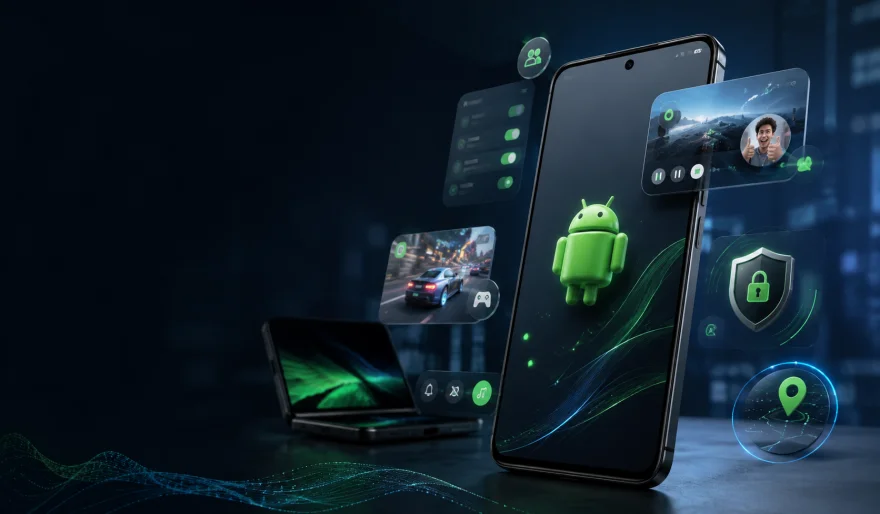
Android 17 Enters a New Era: Smarter, Safer and More Powerful Android Phones in 2026
By Appitika Technology Desk
Published: August 15, 2026
Category: Android / Technology / Mobile News
Android is entering one of its most important stages yet. With the arrival of Android 17, Google is moving beyond traditional operating-system upgrades and building a mobile experience where artificial intelligence, productivity, security and personalization work together more naturally. The stable Android 17 release began rolling out to Pixel devices in June, with other eligible Android smartphones expected to receive the update throughout 2026.
For millions of Android users, the update is more than a visual refresh. Google is changing how people interact with applications, manage their personal information, multitask, create content and protect their smartphones against increasingly sophisticated threats.
Android 17: A More Intelligent Smartphone Experience
One of the biggest themes surrounding Android 17 is the growing role of artificial intelligence.
Google is increasingly describing Android as an “intelligence system”, rather than simply an operating system. Through Gemini-powered capabilities, Android phones are becoming more capable of understanding context, assisting with tasks and helping users accomplish things with fewer steps.
This direction could eventually change the way users think about mobile applications. Instead of opening several apps and manually completing individual actions, users will increasingly be able to rely on AI-assisted workflows that connect information and actions across the phone.
Google has also been expanding Gemini capabilities across its ecosystem, including tools designed to summarize information, assist with forms, improve communication and create personalized experiences.
Floating Windows Make Android More Like a Desktop
One of Android 17's most practical changes is improved multitasking.
The new system allows supported applications to appear in floating windows, making it easier to work with multiple apps at the same time. A user could, for example, keep a messaging application visible while browsing a website, watching a video or working on another task.
Google says the update introduces floating Bubbles and additional multitasking improvements designed to make switching between activities faster and more flexible.
This could become particularly important as Android devices increasingly replace traditional computers for everyday work.
Android 17 Is Also Targeting Gamers
Mobile gaming continues to push smartphone hardware to its limits, and Android 17 includes improvements aimed at making demanding games run more consistently.
Google says it has improved memory management to reduce frame drops and stuttering during high-definition gaming. The company has also introduced an optimized gaming experience for foldable devices, taking advantage of their larger displays and different screen configurations.
For gamers, the significance is not simply about higher performance. Better memory management can help applications behave more consistently when several demanding processes are running simultaneously.
A New Generation of Android Security
Security is another major part of Android 17.
One particularly interesting improvement concerns lost or stolen smartphones. Google's enhanced Mark as lost functionality can allow users to lock a missing device using biometric authentication, adding another layer of protection even when someone knows the device's passcode.
Android 17 also introduces more granular privacy controls. Applications can receive temporary access to precise location information, while users can choose to share selected contacts instead of automatically giving an application access to their entire address book.
Google is also expanding its defenses against suspicious applications, scams and sophisticated attacks through improvements to Live Threat Detection and Advanced Protection.
These changes are particularly relevant as smartphones increasingly contain banking information, private conversations, photographs, work documents and authentication credentials.
Parents Get More Control Over Android Devices
Android 17 also expands Google's parental-control system.
Built-in controls are being extended across Android 17 devices, allowing parents to manage screen time, limit applications and schedule periods of downtime directly through device settings.
This is an important development because families will no longer have to depend entirely on separate third-party applications to manage basic smartphone usage.
Android 17 Is Becoming a Better Platform for Creators
Google is also focusing heavily on content creators.
One of the most interesting additions is Screen Reactions, which allows users to record themselves reacting to content while simultaneously recording what is happening on their screen. This makes it easier to create reaction videos without switching between several applications or using complicated editing workflows.
Google has additionally been improving the Android experience for social-media creators, including efforts to provide better-quality photo sharing and deeper integrations with major platforms.
For TikTok, Instagram, YouTube and other creators, these changes could turn the smartphone into an increasingly complete production studio.
The AI Smartphone Is Becoming Reality
Perhaps the most important story behind Android 17 is not one individual feature.
It is the direction Google is taking.
AI is gradually moving from being an application that users open into something that operates across the entire smartphone experience. Gemini is becoming increasingly integrated into Android, while Google's broader AI strategy includes multimodal models and agent-style systems capable of understanding information and taking actions.
That could mean the next generation of Android applications will look very different from today's apps.
Developers may increasingly build applications around AI agents, voice interaction, contextual recommendations and automated workflows rather than traditional menus and buttons.
What Android 17 Means for App Developers
For developers, Android 17 represents both an opportunity and a challenge.
Applications must adapt to increasingly flexible multitasking environments, stronger privacy expectations, changing background and memory behavior, and new AI-driven user experiences.
At the same time, developers can take advantage of a growing ecosystem in which smartphones understand natural language and interact with users in more conversational ways.
This could lead to a new generation of Android applications capable of doing much more than displaying information.
Imagine a travel application that automatically organizes a complete itinerary, a shopping application that compares products based on a user's requirements, or a productivity application that turns a simple voice request into a complete workflow.
The technology required for these experiences is becoming increasingly accessible.
Android 17 Arrives as Google Pushes Toward an AI-First Future
Android has traditionally evolved through improvements to performance, design, notifications and security. Android 17 continues that tradition, but its larger objective appears to be much broader: turning the smartphone into an intelligent assistant that can understand what users need and help them accomplish it.
The combination of Gemini, advanced multitasking, stronger security, creator-focused tools, foldable optimizations and expanded family controls makes Android 17 one of the more significant Android releases in recent years.
For users, the biggest change may not be something immediately visible on the screen. Instead, it could be the gradual transition from an application-centered smartphone to an AI-centered Android experience.
And that transition has only just begun.
User Comments (0)
Popular Apps










 Games
Games Entertainment
 Communication
 E-mail
 Security
 Tools
Tools Media
Media Internet
 Finance
 Design
 Education
 Android Firmwares
 Travel & Local
 Android
 Windows
 Linux
Linux